Props
Creating props is a fun exercise in creativity and resourcefulness. I have access to a woodshop and a variety of craft supplies that can help with prop construction. Here are some examples of my work.
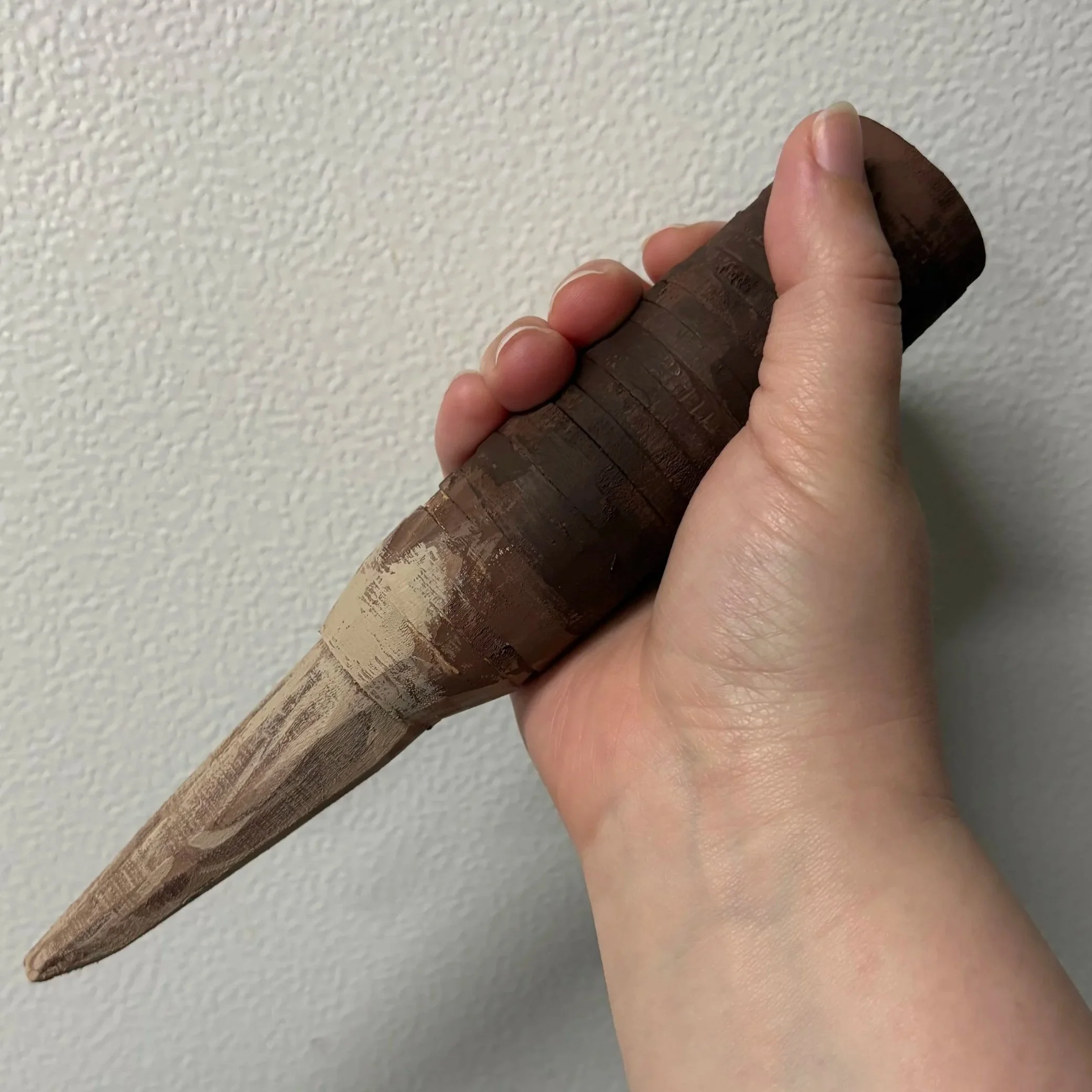
Spring-loaded Stake.
For my Painting, Props, and Special Effects class (TA116) at Mt. Hood Community College, I constructed a wooden stake with a spring-loaded tip for my final project. This prop allows for the stake to retract under light pressure during stage combat. The stake was constructed with three parts: a sheath (the handle), the insert, and a lightly compressible spring. The sheath was constructed out of wooden disks with cores drilled out (drill press) then glued together. The insert was constructed with a wooden dowel at a slightly smaller diameter than the sheath core. The overall shape of the stake was shaped via a disc sander.
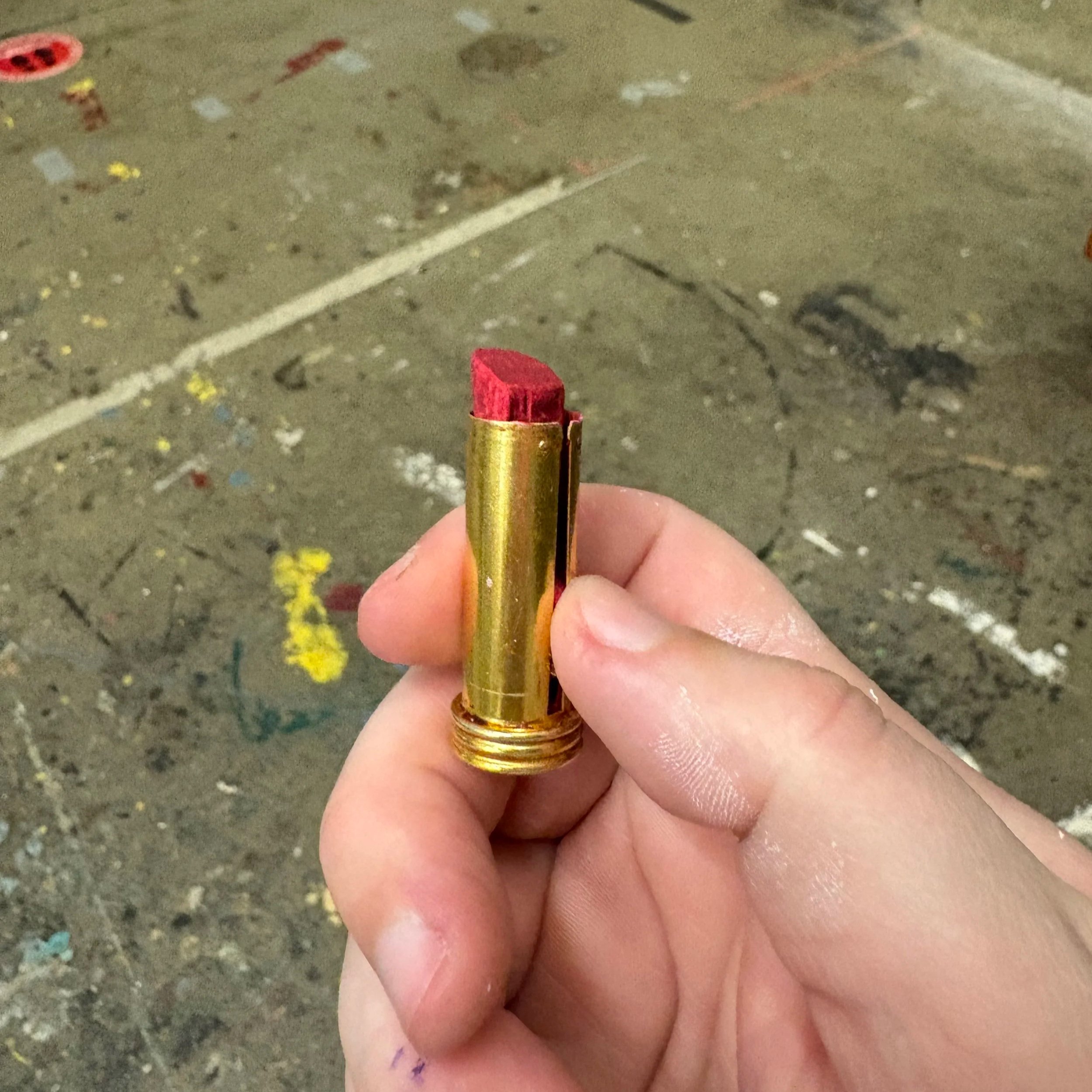
Lipstick.
For Mt. Hood Community College’s production of They Promised Her the Moon, a tube of lipstick is used to for an autograph. To avoid mess and damage to costumes or props, I created a prop using a vintage tube of lipstick. The old lipstick was cleaned out of the tube. I repurposed a broken pool cue—I used a chop saw to cut a portion that would fit in the tube. The narrow end of the pool cue fit into the lipstick slider, and I used hot glue to adhere it permanently. I used a belt sander to shape the wood into the wedge shape of lipstick. I then painted the wood with coats of pink and red to create a dynamic matte lipstick.
Lanterns.
For Mt. Hood Community College’s production of A Midsummer Night’s Dream, the mechanicals used multiple lantern props. I painted black lanterns with a copper paint and a sponge to create an aged, metallic texture. I installed battery-powered tea lights in the lanterns with string to create a swaying effect. Diffuse and amber gels were installed inside the lantern to create the color of flame. The gels coupled with the swaying light created a flickering effect.